When Amoxicillin Stops Working: Understanding Antibiotic Resistance and What It Means for Your Health
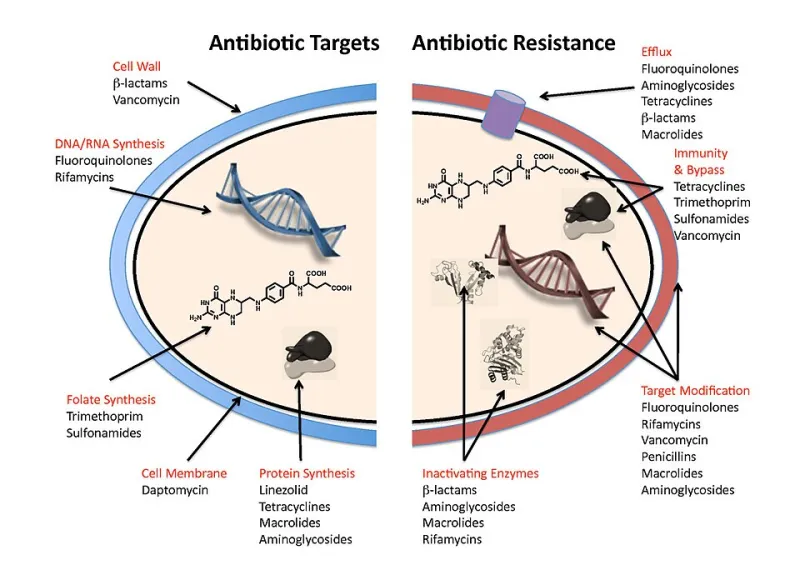
Photo: Gerard D Wright, CC BY 2.0, via Wikimedia Commons
For decades, amoxicillin has been one of the most widely prescribed antibiotics in the United States. It is inexpensive, well-tolerated by most patients, and effective against a broad range of bacterial infections. Yet an increasing number of physicians, pharmacists, and infectious disease specialists are raising alarms: in 2024, amoxicillin is no longer the reliable first-line solution it once was for many common conditions. Bacterial resistance has quietly eroded its effectiveness, and patients who do not understand this shift may find themselves completing a full course of treatment only to see their symptoms persist—or worsen.
This guide is intended to help you understand the resistance problem clearly, so that you can engage in a more productive discussion with your healthcare provider and make informed decisions about your treatment.
What Antibiotic Resistance Actually Means
Resistance does not mean the medication has gone bad or that you personally have become immune to it. Rather, it refers to changes within bacterial populations themselves. When bacteria are repeatedly exposed to an antibiotic—whether in a single patient or across a community over many years—some strains develop genetic mutations that allow them to survive the drug's mechanism of attack.
Amoxicillin belongs to the penicillin class of antibiotics and works by disrupting the construction of bacterial cell walls, ultimately causing the bacteria to rupture and die. Resistant strains have developed enzymes called beta-lactamases that break down the amoxicillin molecule before it can do its job. Once these resistant strains survive and reproduce, they pass their resistance traits to subsequent generations—and the problem compounds.
The Centers for Disease Control and Prevention (CDC) estimates that more than 2.8 million antibiotic-resistant infections occur in the United States each year. While not all of these involve amoxicillin specifically, the broader pattern reflects just how pervasive the resistance crisis has become.
Which Infections Are Most Affected?
Not every bacterial infection has developed equal resistance to amoxicillin. Understanding which conditions are most problematic can help set realistic expectations.
Ear Infections (Otitis Media) Amoxicillin remains a first-line treatment for acute otitis media in children, but resistance among Streptococcus pneumoniae and Haemophilus influenzae—two of the most common culprits—has increased notably. Clinicians now frequently prescribe higher doses or amoxicillin-clavulanate (a formulation that pairs amoxicillin with a beta-lactamase inhibitor) to overcome resistant strains.
Sinusitis Chronic and acute bacterial sinusitis cases are frequently caused by organisms that have developed partial or full resistance to standard amoxicillin doses. Many guidelines now suggest watchful waiting before prescribing antibiotics for sinusitis at all, precisely because of how often the wrong drug—or no drug—gets used.
Urinary Tract Infections (UTIs) Amoxicillin was once a standard UTI treatment, but resistance among Escherichia coli, the bacterium responsible for the majority of UTIs, has climbed so sharply that most current clinical guidelines no longer recommend amoxicillin as a primary option. Trimethoprim-sulfamethoxazole or nitrofurantoin are now typically preferred, though local resistance patterns matter significantly.
Strep Throat This is one area where amoxicillin continues to perform reliably. Streptococcus pyogenes, the organism responsible for strep throat, has shown minimal resistance to penicillin-class drugs. For now, amoxicillin remains a sound choice for this indication—though culture and sensitivity testing remains the gold standard before any prescription is written.
Why Resistance Has Grown So Quickly
Several overlapping factors have accelerated the resistance problem in the United States.
Overprescription: For years, antibiotics were prescribed for viral illnesses—including the common cold, most cases of the flu, and many sinus or respiratory infections—where they provide zero benefit. Each unnecessary prescription still exposes the body's bacterial flora to the drug, creating selective pressure that favors resistant strains.
Incomplete courses: When patients feel better and stop taking their antibiotics early, the weaker bacteria die first while the more resilient ones survive. Those survivors go on to multiply, producing offspring that are more likely to withstand future antibiotic exposure.
Agricultural use: Antibiotics have been used extensively in livestock farming to promote growth and prevent disease in crowded conditions. This widespread non-therapeutic use has contributed to the development and spread of resistant organisms that can ultimately reach humans through the food supply and environment.
Global travel: Resistant bacterial strains that develop in one region of the world do not stay there. International travel has accelerated the spread of resistant organisms across continents and communities.
What Patients Should Know Before Requesting or Accepting a Prescription
Knowledge is a practical tool. Before accepting a prescription for amoxicillin—or requesting one—consider the following points to raise with your physician or pharmacist.
Ask whether a culture has been performed. A sensitivity test identifies which antibiotics will actually work against the specific bacteria causing your infection. Without this information, prescribing is essentially educated guesswork.
Understand that not every infection requires antibiotics. Many respiratory infections, including bronchitis and most sinus infections, are viral in origin. Amoxicillin will have no effect on a virus. Taking it anyway contributes to resistance without offering you any benefit.
Inquire about combination formulations. Amoxicillin-clavulanate (sold under the brand name Augmentin) is designed to counteract the beta-lactamase enzymes that make bacteria resistant to standard amoxicillin. For certain infections where resistance is suspected, this combination may be more appropriate.
Complete every course as directed. If amoxicillin is prescribed, finishing the full course—even if you feel better after a few days—is essential for eliminating the infection entirely and reducing the likelihood of resistance developing.
When Amoxicillin Is Still the Right Choice
Despite the resistance challenges described above, amoxicillin is not obsolete. For susceptible infections—particularly confirmed strep throat, certain dental infections, and some skin infections caused by streptococcal bacteria—it remains highly effective and is often the most appropriate, cost-efficient choice.
The key word is susceptible. When a prescriber has reason to believe—based on local resistance data, patient history, or culture results—that the infecting bacteria are likely to respond to amoxicillin, the drug is still an excellent option. It is well-tolerated, affordable, available in multiple formulations including capsules and liquids, and has a long safety record.
A Note on Responsible Antibiotic Use
At AmoxicillinCaps, we believe that informed patients make better partners in their own care. Understanding antibiotic resistance does not mean refusing treatment when it is genuinely warranted—it means asking the right questions, following prescribing instructions precisely, and trusting your healthcare provider to make evidence-based decisions.
If you have questions about whether an amoxicillin prescription is appropriate for your condition, or if you are concerned about a course of treatment that does not seem to be working, speak with your prescribing physician or a licensed pharmacist promptly. Resistance is a public health challenge, but it is one that informed, engaged patients can help address—one prescription at a time.
